Monday, March 14, 2011

Seeing the World With a Poet's Eyes

In class we have been writing short free-verse poems about the things we see and feel.  We've talked about experimenting with different voices to add interest to our poems.  We've made comparisons (both metaphors and similes) between objects and feelings to help our reader see our subjects in new ways.  We've also played with the physical layout of our poems - adding line breaks and punctuation in intentional ways to create rhythm and highlight special words and phrases.

Our poems are still in the rough draft stage, but we've already figured out how important it is that poetry be read aloud and often by others, even when it is still in progress.

Writers, please share your favorite work-in-progress poem in the comments section.  Don't forget to include your first name only!  You should also feel free to offer observations or compliments on others' poems.

Visitors to our blog should feel free to offer compliments as well - our young writers love the encouragement!

Monday, January 24, 2011

Thesis Statements

Since we came back from winter break, our class has been working on personal essays - expository pieces that teach, explain, or persuade.

We have learned that the heart of any essay is the
thesis statement,
a sentence that sums up the central argument or idea of the writer.  Everything else in the essay directly supports the thesis statement.

Because they are so important, writers in our class have worked hard crafting strong theses that say exactly what we want to say.  Writers, in the comments please tell us your thesis statement!

Monday, October 18, 2010

Our First Author Celebration!

Last Friday our class had our first Author Celebration for our Personal Narratives!  We invited our kindergarten buddies to listen, and proudly read our stories.

Authors, in the comments please tell us what you liked about the Author Celebration!


Wednesday, September 29, 2010

Writing Descriptive Details

In order to make our personal narratives stronger, we have been talking in class about adding descriptive details to our writing. Descriptive details include:
  • Adjectives (words that describe, like enormous, green, freezing, outstanding, etc.
  • Interesting verbs (powerful action words, like sprinted, leaped, rushed, twirled, etc.
  • Telling the "who" - who was there with you?
  • Telling the "where" - where were you?
  • Telling the "why" - why did events happen the way they did?

Let's focus on adjectives in this post. What adjectives could you use to describe the Issaquah Salmon Hatchery? Use the photos below to give you ideas. List as many adjectives as you can think of in the comments!


What colors do you see?


What textures do you see?


What shapes do you see?


What temperatures do you imagine?

Tuesday, September 21, 2010

True Stories from Our Lives

In class we have been writing in the genre of personal narrative - true stories from our lives. The wonderful thing about this genre is that the ideas for our stories are already here for us - we just have to remember them and write them down!

One strategy for thinking of ideas is to notice an object, then let that object spark a memory. For example, I might notice the tape dispenser on my desk:

I'm going to let that spark a memory for me... hmm... I remember when I was 10 and my brothers discovered that they could use tape to make crazy faces, taping their noses up, their eyebrows down, etc. I could write a story about that memory!
So now writers, you try it! Here are some objects to get you started. Spend a moment on each one, and write down any memories that get sparked!

Friday, May 7, 2010

Introducing: Popology

Introducing the very first comic in Henry and Gavin's new series, Popology. Please leave compliments and suggestions for future adventures in the comments. Enjoy!

Friday, April 23, 2010

Book Release: Our Golden Words


Yesterday was a big day for writers in Room 241! For the last few weeks we've been working hard on our realistic fiction stories. We took our stories and turned them into a class book, and yesterday we had our book release party!


We invited the writers from Ms. DeTolla's class to come, and gave each of them their own copy of our book too.


While we read our stories aloud, our audience could read along!


Afterwards, authors autographed books for lucky guests!

Monday, April 12, 2010

Helen Keller


Helen with her teacher, Annie Sullivan


Helen with her dog


Helen as a young woman


Helen later in her life

Last week we read the biography of Helen Keller. Helen had lots of amazing moments in her lifetime. The most famous was the moment when she first understood the word, "water" at the pump with Annie. If you were going to write a small moment (seed) story from Helen's life, which moment would you pick to write about? Why?

Thursday, April 1, 2010

Room 241 Movie Premiere!


Check out our class blog HERE for all the latest details on our Poetry Movie Premiere!

Monday, March 8, 2010

Powerful Poetry!


Writers, this blog is a great place to share the poetry you have been writing in class - kind of like when we do our Author's Chair!


Please share a poem in the comments. Remember to think about your line breaks, and don't forget to sign your first name!

Monday, February 22, 2010

Just for Fun: Percy Jackson


During mid-winter break a new movie came out: Percy Jackson and the Olympians: The Lightning Thief.
Many third graders in room 241 have been reading this exciting series. Readers, have you seen the movie yet? How did you think it compared to the book? Leave your opinion in the comments!

Monday, February 1, 2010

Native American Legends


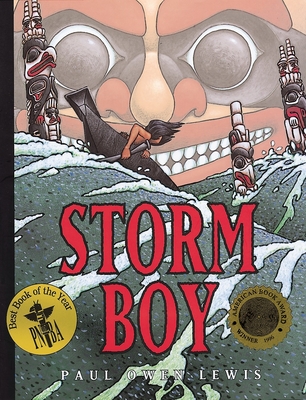
Writers, last week you wrote legends inspired by the book, Storm Boy, by Paul Owen Lewis. In the comments, please tell us about the main character and plot of your legend. Don't forget to include your first name!

Monday, November 9, 2009

Save My Turkey!


In class we are writing letters to persuade Mrs. Lee to spare our turkeys! Third graders, who is your turkey? What is his or her name? Occupation? Accomplishments?

Friday, October 23, 2009

Our First Author Celebration!


For our first Author Celebration, our third graders shared their Personal Narratives (true stories from their lives) with our kindergarten buddies. Check out the photos below!


Friday, October 9, 2009

The Secrets of the SPY Codes

A short article by Siddharth Pyapali


Have you ever wondered how spies carry secret messages from one place to another? They use a lot of spy codes! Shhh... close your windows and doors, I'm going to tell all the secrets of the spy codes. So, read on to know more! (hint: every code needs a key)


Every spy uses their own spy codes, but there are some famous codes that you can use after reading this article to make your own secret messages. Some popular codes are:

The Pinhole Code

The Undercover Postcard Code

The Wheel Code

The Playing Card Code

The Navajo Code

The Spike Code

The Keyboard Code


Pinhole Code

All you need to make a Pinhole Code is a magazine or newspaper and a safety pin. That's it! The Pinhole Code was invented in England almost 200 years ago. People who could not afford to mail a letter figured out a clever way to write to their friends. They would make pin prick holes above printed letters in the newspaper until they spelled out a message. It didn't cost a cent to send. And that is the secret of the Pinhole Code.

The Undercover Postcard

You can send a secret message by writing in tiny letters in a top right corner of an envelope. Place a gummed stamp on top of it, and mail. Your friend needs to place some water on top of the stamp to easily peel it off to read the secret message.

The Wheel Code

The wheel code is made by using a decoder wheel. The decoder wheel has an inner wheel and an outer wheel. The outer wheel has the alphabet in clockwise order from A to Z. The inner disc has all the letters jumbled up. By lining up the inner wheel with the outer wheel you can make the wheel code.

The Playing Card Code

Pull out two full suits of cards from a deck to make a total of 26 cards. Make each card stand for one letter from the alphabet. This is the key to a code.

The Navajo Code

This is about sending messages in your native languages. The enemy will never know what you are talking about.

The Spike Code

You start with the Morse Code that is made up of dots and dashes. To convert the Morse Code to the Spike Code, use a tall spike to stand for a dash and a short spike for a dot.

The Keyboard Code

The letters on the keyboard are not in A-Z order, so take a blank sheet of paper and order it A-Z. Place it on the keyboard and type your message using the key!

Thursday, October 1, 2009

Kaitlin's Treasure Story

Kaitlin would like compliments and suggestions for her story, below. This story is only a draft.

Demi's Concert

One day I went to Demi Lovato's concert. "I had front row seats," I said. "When I walked in, it was so crowded." I walked to the line for t-shirts. I waited in line for 45 minutes. Then finally I got my t-shirt. Then we went and took our seats. "First David Archuleta came out," and sang 5 songs! Then Demi Lovato came out! She sang my two favorite songs, "This is Real, This is Me" and "Here We Go Again," and much, much more! "She rocked!" I said. When the concert was over it was very late and I was very tired. When I got home my dad put me to bed and said, "Did you have a good night?" I smiled and went to bed.

Please leave suggestions and compliments in the comments for Kaitlin!

Thursday, September 24, 2009

Wackadoodle Spelling

The truth is, spelling in the English language doesn't always make a lot of sense.

For example, how on earth did "L" end up in the middle of the word "could"?

And given that "again" ends the same way as "rain," "drain," and "Spain," why isn't it pronounced the same way?

Because of their inherant wackiness, many words need to simply be memorized. But memorizing doesn't have to be boring! Here are a few fun ways that we practice spelling our word wall words over and over in class!

Alphabet stamps:

Wikki Stix:

Colored sand:


Play-doh:

Etch-a-sketch:
How do you make spelling practice fun at home?